RV & Motorhome Detailing in Springfield & Eugene, OR
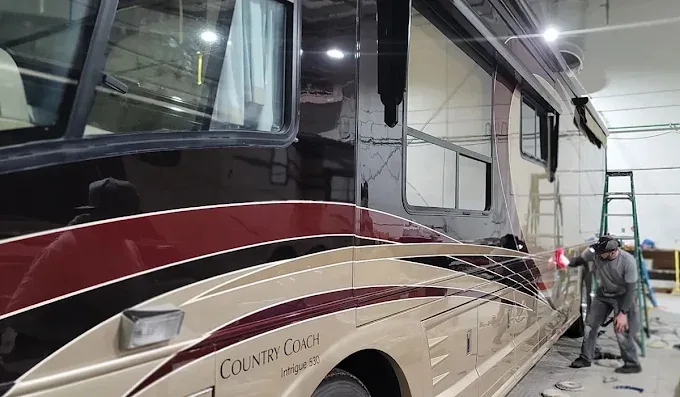
RV detailing at Blue Rose Auto Detailing Services is built around fiberglass gelcoat — not automotive paint. Oxidation removal, rubber roof membrane treatment with EPDM and TPO-safe products, slide seal conditioning, and awning cleaning are handled with techniques specific to recreational vehicles. We detail Class B vans through Class A coaches at our Springfield shop.
Most RVs don't have automotive clear coat — they have fiberglass gelcoat, and the rubber roofs on most motorhomes are either EPDM or TPO membrane. The products that restore automotive paint will damage gelcoat if applied incorrectly. The wrong cleaner on a rubber roof degrades the membrane and shortens its life. Treating an RV like a large car is how the wrong shop does this job.
The white haze that develops on RV fiberglass is gelcoat oxidation — the surface breaking down from UV and weather exposure. Light oxidation (surface haze with some gloss remaining) responds to a single compound and polish pass and can restore close to original. Heavy oxidation (fully chalky, significant color loss) is a multi-pass job and may recover 70–80% of original depth; some color loss at that stage is permanent without repainting. We assess every rig at intake, tell you what the correction will realistically achieve, and quote accordingly — before we start.
Call (541) 337-9893 or bring your rig in for a free assessment.
Before You Book
What to do instead
Failing or peeling gelcoat: fiberglass repair before polishing — compounding a failing surface makes it worse, and we'll say so at intake. Active interior mold: remediation addresses the source; a detail after remediation is the right sequence. Roof seam or water damage: seam repair and drying before we touch the exterior. We can point you to specialists for any of these.
Step by Step
We identify the roof membrane type — EPDM or TPO — before any product touches it. EPDM is the soft, slightly chalky-feeling membrane; TPO is smoother and firmer. They require different cleaners: bleach-based and citrus products degrade EPDM over time, causing cracking and premature membrane failure. After cleaning with the appropriate product, we inspect seams and note any separation or cracking. Those are repair items, not detail items — we flag them before proceeding.
High-pressure wash starts at the roof and works down. Road film, bug splatter, and tree debris are heaviest on the front cap and lower side panels. Cleaning top-down prevents contamination already washed from upper surfaces from running back over clean panels. Wheel wells and undercarriage skirt areas get separate attention — they carry the most road spray accumulation.
After the pre-wash, we assess gelcoat oxidation across all fiberglass panels — sides, front cap, and rear. Light oxidation: one pass with a medium compound and foam pad restores most of the original depth. Medium oxidation: two passes, starting aggressive and finishing with a finer polish. Heavy oxidation: multi-stage cut, and we tell you upfront what the realistic outcome is. Some severe cases won't fully recover without re-gelcoating — we say so before charging for correction that won't get there.
Rubber slide-out seals dry, crack, and allow water intrusion if they're not cleaned and conditioned regularly. We clean each seal with an EPDM-safe product and apply conditioner to restore flexibility. Awning fabric is cleaned with a gentle cleaner that removes mildew and biological growth without degrading the fabric coating — harsh cleaners break down awning fabric faster than weather does.
A polymer sealant applied to all polished fiberglass surfaces adds UV resistance and makes subsequent cleaning easier — road film and bio-growth don't bond as readily to a protected surface. For owners who want longer-term protection, ceramic coating on fiberglass is available: the self-cleaning effect on a large surface area between annual details is significant, and it slows the oxidation cycle considerably.
RV interiors accumulate campsite odors, cooking smells, and moisture-driven mildew in ways car interiors don't. We vacuum and extract upholstered seating and carpet, clean kitchen and bathroom surfaces, and treat any odor issues. We note what we find at intake and tell you before starting whether a detail will resolve it or whether the source needs addressing first.
Pricing
RV detailing is priced by rig size, oxidation severity, and which services are needed. A basic exterior wash, compound, and polish on a standard Class C typically runs a full day (8+ hours). A full interior and exterior detail with heavy oxidation removal on a larger Class A can run 2 full days. Oxidation severity is the biggest price variable — light haze takes one pass; heavy chalking takes multiple stages. We quote after seeing the rig. Call (541) 337-9893 or bring it by for a free assessment.
In Lane County
Lane County has one of the highest concentrations of RV owners and dealerships in Oregon. Coburg Road off I-5 hosts a cluster of major dealers where buyers drive off the lot in new rigs, often without a plan for maintaining the fiberglass and rubber roof through Oregon's seasonal cycle. A new rig that goes into its first winter without protection comes out of storage with the beginning of an oxidation problem.
The use pattern here runs on two peaks: spring prep before Cascade trips — McKenzie River Valley, Willamette Pass, Diamond Lake — and coast runs to Florence and the Oregon Dunes, then a post-season detail in September or October before the rains. That's the natural detail schedule for most Lane County RV owners: one pre-season job to protect the rig going into high-use months, one post-season job to clean off the summer accumulation and condition the seals before winter storage.
Oregon's wet winters are hard on rigs that go in dirty. Black streaking from the rubber roof runs and sets on the fiberglass during winter rain. Bio-growth accelerates on damp surfaces. An RV stored dirty in October comes out harder to clean in April and starts each season a little further behind. The post-season detail is the one that makes the pre-season one easier.
FAQ
You bring your vehicle to us at our shop: Suite 100, 3436 Olympic Street, Springfield, OR 97478. We're not a mobile service — working in our controlled indoor environment allows us to do higher-quality work, especially for paint correction, ceramic coating, and PPF, which require clean conditions. Most customers drop off their vehicle in the morning and pick up the same day for detail work, or the following day for multi-stage correction or coating jobs.
Gelcoat oxidation is the most common issue we address on RVs, and the answer depends on severity. Light oxidation — surface haze with some gloss still visible — responds to a single compound and polish pass and can restore close to the original color depth. Medium oxidation — dull with some color loss, no gloss — takes two passes and recovers most of the depth. Heavy oxidation — fully chalky, significant color loss across large panels — is a multi-stage job, and we'll tell you upfront that some color loss at that stage is permanent without re-gelcoating or repainting. We assess every rig at intake and tell you honestly what correction will achieve before we quote.
An RV detail takes significantly longer than a car detail due to the surface area involved. A basic exterior wash and polish on a standard Class C is typically a full day (8+ hours); a full interior and exterior detail with oxidation removal on a larger Class A can take 2 full days. We'll assess your rig and give you a time estimate before scheduling.
The best times to detail an RV are before and after camping season. A pre-season detail removes winter storage grime, conditions rubber seals and slide gaskets, and applies protection before the rig sees UV and weather exposure. A post-season detail before storage removes biological growth, conditions the rubber roof, and prevents oxidation from setting in over the winter. Annual detailing significantly extends the life and appearance of fiberglass and painted surfaces.
The first step is identifying the membrane type — most RV rubber roofs are either EPDM or TPO. EPDM is the soft, slightly chalky-feeling material found on older rigs; TPO is smoother and firmer, more common on newer units. They require different cleaners. Bleach-based products and citrus cleaners degrade EPDM over time, causing cracking and shortening membrane life. We use a membrane-appropriate cleaner for each type. After cleaning, we inspect the seams for cracking or separation and flag any that need repair — those are separate from the detail and should be addressed before the next camping season.
Yes — and it's one of the better applications of ceramic coating we offer. The self-cleaning effect on a large fiberglass surface is significant: black streaking from the rubber roof runs off rather than setting, bio-growth doesn't bond as readily, and UV degradation slows. Between annual details, a ceramic-coated RV stays cleaner and is easier to wash. The process is the same as on a vehicle: fiberglass must be fully decontaminated and oxidation-free before application. We price ceramic on RVs by surface area — call (541) 337-9893 for an estimate once we've seen the rig.
Where We Serve
Our shop is located at 3436 Olympic Street in Springfield, OR — accessible from communities across Lane County. Drop off your vehicle or call for details.
Blue Rose Auto Detailing Services — Suite 100, 3436 Olympic Street, Springfield, OR 97478 — (541) 337-9893
Fair pricing, honest work, owner-inspected quality since 1994.
(541) 337-9893Owner-operated since 1994 · Springfield, OR · No surprise charges